Skin Cancer
Cancer
Physical Health Conditions
Healthy People
Skin Cancer
 Introduction
Skin cancer is the abnormal growth of skin cells. There are two main types of skin cancers, non-melanoma and melanoma; it is important to know there are different types, as they are treated differently.
Non melanoma includes Basel cell skin cancer, squamous cell skin cancers and other rare types. Whilst melanoma develops from skin cells called melanocytes and are found in the layer of skin tissue lining some parts of the body (mucous membrane) and the eye.1
The structure of the skin
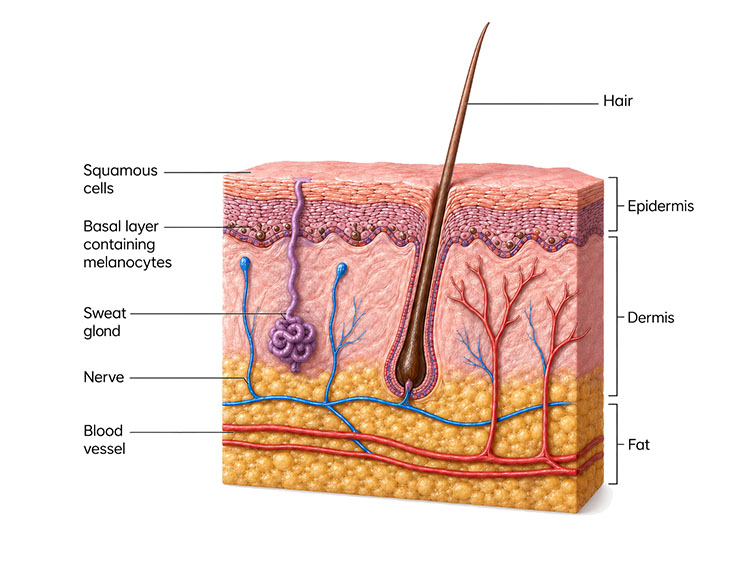
The diagram shows the structure of the skin; The epidermis is the top layer. It is mostly made of squamous cells. The bottom part of this layer has basal cells and melanocytes. Under the epidermis is the dermis. This layer has nerves, blood vessels, and sweat glands. Hair starts in the dermis and grows up through the epidermis to the surface of the skin. Beneath the dermis is a fat layer.2
It is important to know how your skin usually looks, to better identify symptoms of skin cancer, which may present as:
- A sore that doesn’t heal- this could look see through, shiny and pink or pearly white. It may also look red, and may feel sore, rough and have raised edges.
- Ulcer- An area of skin that has broken down (ulcerated) and doesn’t heal within 4 weeks.
- A lump- This may be small, shiny and pink or red and slow growing.
- Red patches on your skin- The patches could be itchy and may be due to other non- cancerous skin conditions, but advice is always to get checked.
- Freckles or moles- A change can be a sign of skin cancer (melanoma).
The ABCDE rule is a helpful guide for spotting early signs of melanoma3
- Asymmetry- if one half of the mole looks different to the other half.
- Border- irregular or poorly defined edges
- Colour- uneven colouring
- Diameter- typically larger in size (6mm)
- Evolution – any change in size, colour shape or texture over time
Risks Factors to skin cancer
Sun exposure
The biggest risk factor to skin cancer is exposure to ultraviolet light (UV light), and this can be through natural sunlight, or artificial devices such as sunbeds. The UV light causes damage to the DNA material in our skin cells, and over time this can cause skin cancer to develop.
Melanoma skin cancers are linked to short periods of strong sun expose, such as sunbathing or when on holidays in hot countries.
Non-Melanoma skin cancers such as basal cell carcinoma (BCC) and squamous cell carcinoma (SCC) are linked to ongoing and long-term sun exposure, such as many years spent working outdoors or a history of sunburn4
Skin Colour
People with fair skin, and those prone to burning more easily, are at greater risk of skin cancer. This is due to fair skin having less melanin, which is a protective pigment within the skin. People with black skin have increased risk of developing acral lentiginous melanoma, which occurs on the soles of feet, palm of hands and nail beds.
Age
As people get older, their chances of developing non-melanoma skin cancer increase. However, younger people can still get these types of skin cancer too.
There are several other risk factors for skins cancer including
- Previous diagnosis or a family history skin cancer
- Skin conditions, such as solar keratosis, xeroderma pigmentosum, and some treatments for psoriasis and Eczema.
- Post radiation exposure
- Weakened immune system
- Some chemicals (that people may work with such as polychlorinated biphenyls (PCBs).
Research shows that people with certain medical conditions, such as inflammatory bowel disease (IBD), a weakened immune system (including those with HIV or AIDS), or those taking immunosuppressant medication, have a higher risk of developing melanoma.5
Anyone who is worried about their skin or notices any changes should speak to their GP. The GP may be able to reassure them, give advice, or provide early treatment if they are trained to do so. If needed, the GP will also arrange a referral to a specialist.
Early detection is important, as most skin cancers can be treated successfully when found early.
 Why is it important to Population Health?
Skin cancer is important for population health due to the increasing incidents, with 20,800 projected cases in 2024, and melanoma skin cancer having increased by a third over the past decade.6
Importantly, approximately 17,000 cases of melanoma each year are preventable, with 9 in 10 cases in the UK caused by too much expose to UV radiation from the sun and sunbeds.
Melanoma rates are increasing across all age groups, with the biggest rise seen in adults over 80, whose incidence has grown by 57% in the past decade. Rates have also risen by 7% among adults aged 25–49. Younger people today may be more aware of the risks of UV exposure and take better precautions, while older generations may have had higher sun exposure due to less awareness and the surge in affordable holidays from the 1960s onwards. A growing and ageing population, along with improved awareness and earlier GP consultations for skin changes, has also contributed to the record number of diagnoses in the UK.
Inequalities
People living in lower-socioeconomic communities often face inequalities that limit their access to clear information about skin-cancer prevention and early detection. This can increase their risk of late diagnosis and poorer outcomes.
Evidence shows that outdoor workers—such as construction workers and farmers—face a 60% higher risk of developing skin cancer due to prolonged exposure to the sun. Large numbers of people in the UK work in roles that involve significant time outdoors, including over 500,000 people employed at outdoor facilities and events, around 2.5 million working in construction, agriculture, forestry, or fishing, and a further 500,000 workers in occupations that require extended periods outside. Together, these groups represent a substantial portion of the workforce who are at increased risk, as many do not have consistent access to protective equipment, shade, or workplace sun-safety measures.7
These inequalities underline the need for targeted support and accessible prevention messages for those most at risk.8
NHS healthcare burden
The diagnosis and treatment of skin cancer place a substantial and growing demand on NHS resources each year, which in 2023 were reported to have cost the NHS £750 million annually.9
With skin cancer now accounting for almost 50% of dermatology workload in the UK, creating additional strain on already stretched services.
Economic impact
Cancer, including skin cancer can cause significant reduction in workforce participation, leading to long term sickness and early retirement. It is estimated the UK economy loses around 10.3 billion per year from cancer, more than any other disease.
 The Derbyshire Population Health Approach
The Derbyshire Population Health Approach focuses on prevention, population health, evidence-informed practices, causes, and collaboration. It emphasises proactive measures to prevent health issues, tailors interventions to specific populations, incorporates evidence-informed practices, addresses underlying causes, and promotes collaboration for effective action.
When considering the topic of skin cancer within The Derbyshire Population Health Approach:
• Prevention
Sun safety is one of the most important ways to prevent skin cancer. Simple steps—like wearing a hat, using sunglasses that protect against UV, and applying sunscreen regularly—can make a big difference in keeping skin safe.
In the UK, it’s very easy to get sunburnt, even on cloudy or cooler days. UV rays can still damage the skin, and because you can’t see or feel UV radiation, people often don’t realise they’re at risk. This is why seasonal reminders, public campaigns, and regular sharing of sun-safety messages are so important. They help people understand the risks and take easy steps to protect themselves.
• Population
There are significant differences in the risk of developing skin cancer, the impact it has on individuals, and the chances of survival, depending on where a person lives. People living in areas with higher levels of income inequality may be more exposed to risk factors such as limited access to sun protection, outdoor work without adequate protection, or lower awareness of skin cancer prevention. These communities may also be less likely to engage with early detection initiatives, such as skin checks.
• Evidence
The national cancer plan for England identifies UV radiation as the third highest preventable cause of cancer, after tobacco and overweight and obesity.10
The Plan also commits to tightening regulations on commercial sunbeds, reflecting strong evidence that UV-emitting sunbeds are classified as Group 1 carcinogens, alongside tobacco, radon and asbestos. Early sunbed use significantly increases risk, with sunbed exposure before age 20 raising melanoma risk by 47%.11
• Causes
The population approach to skin cancer focuses on the key causes of excessive ultraviolet (UV) expose from the sun and sun beds, and the need to protect groups at higher risk such as outdoor workers. By targeting these known causes with tailored interventions and strong partnership working, the approach aims to reduce avoidable harm and improve skin-cancer outcomes across the population.
• Collaboration
There are both national and local prevention initiatives designed to reach specific groups of people. To make these efforts truly effective, strong collaboration between partners is essential. Working together helps ensure that prevention messages are consistent, well-understood, and reaching those most at risk.
A coordinated approach between key organisations—such as the NHS, Public Health, and community services—helps spread trusted information widely. By sharing resources, aligning messages, and supporting each other’s work, these partners can promote clear prevention advice and encourage early detection. This joined-up way of working is vital for improving population health outcomes and reducing inequalities.
 Latest Derbyshire Data
Trend Data
Prevalence Maps of Derbyshire
The maps below illustrate various geographies for Derbyshire. LSOAs and MSOAs are geographical divisions used for statistical purposes, allowing for more detailed analysis of local data. In these maps, you can explore various health indicators and data for Derbyshire, providing valuable insights into the area’s health and wellbeing.
 |
In the top right of the map, you’ll find the ‘Layer Control’ icon. This is an easy way to customise what you see on the map visualisation. Click the ‘Layer Control’ to choose which information is displayed on the map. Pick the indicator that interests you the most, and the map will transform accordingly. |
Slope Index
This chart illustrates the differences in health and lifestyle factors across areas in Derbyshire, from the most deprived (decile 1, red) to the least deprived (decile 10, green). As you move from left to right on the chart (from more deprived to less deprived areas), the line shows whether these factors are becoming more or less common. Essentially, it’s a way to see how living in wealthier or poorer areas affects the prevalence of these factors.
 Further Analysis & Assessments
Derbyshire Joint Strategic Needs Assessment (JSNA) involves a thorough examination of a specific health problem, exploring its causes, consequences, and underlying factors. It combines various data sources, collaboration with stakeholders, and rigorous analysis to generate insights for evidence-informed interventions and policy changes.
 More Information & Resources
Here is a list of useful resources and information related to skin cancer. These materials are intended to help professionals, partners, and communities understand the topic and connect people with relevant services and guidance.
Contributors
Stacey Speed, Advanced Public Health Practitioner
Footnotes
Skin cancer - information about the causes and risk factors | Macmillan Cancer Support↩︎
Risks and causes of melanoma skin cancer | Cancer Research UK↩︎
Skin cancer cases reach all-time high - Cancer Research UK - Cancer News↩︎
NHS England — South West » Dermatologist warns outdoor workers on the increased risks of skin cancer↩︎
Crackdown on illegal underage sunbed use to cut teen cancer risk - GOV.UK↩︎
The National Cancer Plan for England: delivering world class cancer care↩︎
Crackdown on illegal underage sunbed use to cut teen cancer risk - GOV.UK↩︎