Cervical Cancer
Healthy People
Physical Health Conditions
Cancer
Cervical Cancer

 Introduction
Cervical cancer is the 14th most common cancer in the UK1. Around 3,300 people are diagnosed with it each year2. It is most common in people in their mid to late 30s. In England, cervical screening helps diagnose around 39% of cervical cancer cases3.
Cervical screening, previously known as a smear test, checks the health of the cervix. The cervix is the opening to the womb at the top of the vagina. During the test, a small sample of cells are taken from the cervix. The test looks for human papillomavirus (HPV), which causes around 99.8% of cervical cancers4. If HPV is not found, the person returns to routine screening in 5 years. If HPV is found, the sample is checked for abnormal cell changes. If no abnormal cells are found, the person is invited for another screening test in 1 year. If abnormal cells are found, the person is referred for a colposcopy, which is a closer examination of the cervix.
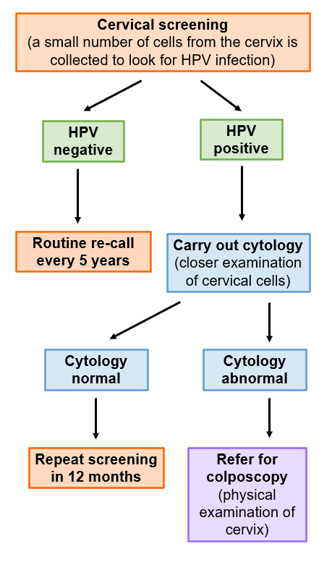
Screening is offered to anyone with a cervix aged 25 to 64. Most people are invited every 5 years. Screening rates have fallen in Derbyshire and across the UK. However, NHS England aims to eliminate cervical cancer by 20405. The UK national screening committee recommended in 2025 to introduce self-taken HPV swabs for people who delay attendance or have never attended for cervical screening.
People are invited for screening by letter, text message, or through the NHS App. Trans men and non-binary people with a cervix may not automatically receive invitations if they are not registered as female at their GP surgery. They can still arrange screening by contacting their GP practice or local screening service. People should not have cervical screening during pregnancy or until 3 months after giving birth.
To help prevent cervical cancer, boys and girls aged 12 to 13 are offered the HPV vaccine. A single dose given before the age of 25 protects against 9 types of HPV6. More information about the HPV vaccine is available in a dedicated JSNA article (link to article).
 Why is it important to Population Health?
Cervical screening is important because it helps to find people at a higher risk of cervical cancer. Cervical cancer leads to around 880 deaths every year in the UK7. This is more than 2 deaths every day, and more than a quarter of all cervical cancer cases diagnosed annually8. This also accounts for 1% of all cancer deaths9.
Cervical cancer outcomes are affected by health inequalities. Cervical and uterine cancer mortality rates are 61.1% higher in the most deprived areas in the UK compared to the least deprived areas10. This means that women from the most deprived areas are less likely to survive cervical cancer. For example, 6 in 10 (56.2%) women from the most deprived areas survive cervical cancer for 5 years or more, compared to 2 in 3 (65.7%) women from the least deprived group11.
There is also a huge difference in cervical cancer survival depending on age. The mortality rate is the highest in females aged 85 to 89 years12. Furthermore, only around 1 in 4 (28%) women aged 75-99 survive cervical cancer for 5 years or more, compared to 9 in 10 (88.9%) women aged 15-4413. Data also suggests that there are inequalities related to ethnicity, as black African women have a higher mortality rate from cervical cancer14.
The cervical screening programme itself also drives health inequalities. Women from more deprived areas are less likely to access cervical screening15. Asian women also have a lower uptake of cervical screening compared to white women16. Furthermore, patients with learning disabilities have been found to be less likely to receive an invitation for cervical screening and they are more likely to be removed from the screening programme17. People experiencing homelessness and people with severe mental illness are also less likely to participate in cervical screening18,19.
Cervical cancer also has a huge socioeconomic impact. The Office of Health Economics (OHE) calculated that the lifetime cost per every cervical cancer case is almost £210,00020. Annually, this roughly equates to £690 million21. Moreover, OHE estimates that £2.6 billion could be saved if the UK achieves the WHO elimination threshold of 4 cases per 100,000 by 204622. There are also incalculable costs, such as a patient’s quality of life. Symptoms of cervical cancer include abnormal vaginal bleeding and discharge, pain during sex and generalised pain in the pelvis, back or abdomen which may all affect emotional wellbeing and sexual relationships23. Cervical cancer treatment, the recovery period and survivorship can also all impact on a patient’s wellbeing and quality of life24.
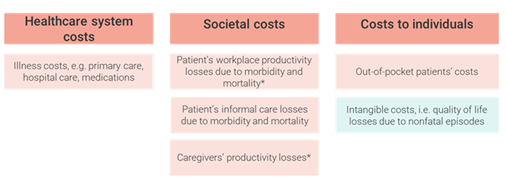
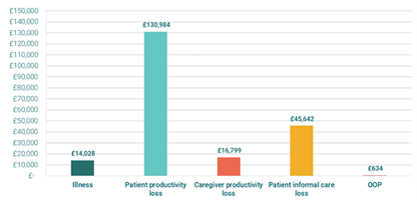
Figures from OHE to illustrate the different costs related to cervical cancer25.
Cervical screening and HPV vaccination are two key public health programmes which are essential in helping to achieve the aim of eliminating cervical cancer by 204026,27. Additionally, as women live longer than men, they tend to spend more of their life in ill-health. Therefore, the cervical screening programme is crucial in trying to improve the long-term outcomes for people with a cervix28. However, despite its importance, cervical screening has declined in recent years29. The WHO target is that by 2030, by the age of 35, 70% of women should have undergone cervical screening30. Significant work also needs to be carried out to reduce the health inequalities associated with cervical screening and cervical cancer.
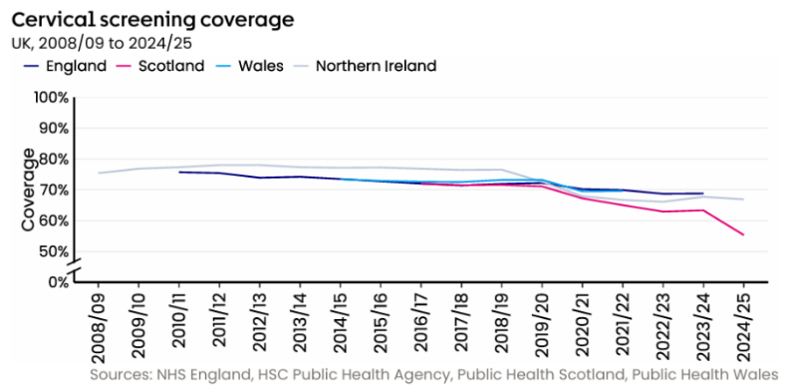
A graph from Cancer Research UK demonstrating the decline in cervical screening (3).
 The Derbyshire Population Health Approach
The Derbyshire Population Health Approach focuses on prevention, population health, evidence-informed practices, causes, and collaboration. It emphasises proactive measures to prevent health issues, tailors interventions to specific populations, incorporates evidence-informed practices, addresses underlying causes, and promotes collaboration for effective action.
When considering this training topic within The Derbyshire Population Health Approach:
• Prevention
Cervical screening programmes aim to reduce the risk of cervical cancer. Almost all cases of cervical cancer are caused by human papillomavirus (HPV). The HPV vaccine helps protect against the types of HPV most commonly associated with cervical cancer. Around half of HPV infections are cleared naturally by the immune system within one year. High-risk HPV types are thought to be more likely than low-risk types to persist in the cervix for longer periods, increasing the risk of abnormal cell changes and cervical cancer31. Further information about the HPV vaccine is available here (link to HPV JSNA article).
Smoking is also a recognised risk factor for cervical cancer. It is associated with a 21% increase in risk, particularly for cervical squamous cell carcinoma32. This increased risk is seen in both current and former smokers. Smoking is thought to increase susceptibility to HPV infection and weaken the immune response, making it more difficult for the body to clear the virus. Chemicals found in tobacco smoke may also cause abnormal changes in cervical cells. Derbyshire residents can access support for lifestyle changes, including smoking cessation, through Live Life Better Derbyshire.
Use of the combined oral contraceptive pill has been associated with a small increase in the risk of cervical cancer after five or more years of use. However, this risk gradually decreases after stopping the pill and returns closer to baseline after ten years or more. The risk of cervical cancer is around three times higher in people with a cervix who have had six or more sexual partners and approximately twice as high in those who had their first sexual intercourse before the age of 1533. Sexually transmitted infections (STIs) can also make it more difficult for the body to clear HPV infection.
People living with HIV have an approximately six-time higher risk of cervical cancer, although this risk is thought to be reduced in those receiving antiretroviral therapy34. Due to this increased risk, people with HIV who have a cervix are advised to attend cervical screening annually. The Derby and Derbyshire Sexual Health Strategy 2024–2027 aims to improve uptake of STI and HIV testing and improve health outcomes for vulnerable populations. In addition, Derbyshire is developing a local plan to support delivery of the HIV Action Plan for England, which aims to end new HIV transmissions in England.
• Population
Cervical cancer can affect anyone with a cervix. Females are automatically invited for cervical screening every 5 years from the ages of 25 to 64 years.
In Derbyshire, the number of eligible women having cervical screening varies between the different Primary Care Networks (PCNs). Women from more deprived areas have been found to have lower screening rates alongside worse outcomes with higher mortality rates35,36. Derbyshire has some of the most deprived areas in England37,38. Areas such as Chesterfield, Bolsover and Erewash, who have the highest concentration of deprivation39, should be prioritised for targeted interventions to improve screening coverage and long-term cervical cancer outcomes.
Although most of the Derbyshire population is ethnically white, ethnic minorities are still present and they may experience challenges in accessing cervical screening. For example, language barriers may reduce awareness of the screening programme or cultural differences may mean that some women feel that screening is not a health priority40. Research has suggested that Asian women are less likely to access cervical screening compared to white women41, and according to the most recent census from 2021, 1.5% of the Derbyshire population are Asian, Asian British or Asian Welsh42. More research may be beneficial in understanding the barriers faced by Asian women in attending cervical screening and identifying effective interventions to ensure that their health needs are addressed.
Another group facing difficulties with lower cervical screening rates are people with learning disabilities43. It is estimated that there are 20,000 people across Derby and Derbyshire who show a learning disability44. It is vital that anyone eligible from this group for cervical screening is not excluded from receiving an invitation. This group of people may also benefit from increased supported to make an informed decision about choosing to go for screening and ensuring that appropriate adjustments are in place during the appointment to create a positive experience.
Derbyshire also faces challenges due to its rural setting. Research has found that people with a car are more likely to attend screening45, and so this may be a barrier to almost 20% of the Derbyshire population who reported that they did not own a vehicle in the household in the last census46. These patients may require targeted communications about public transport routes to enable them to attend their screening.
Trans men or non-binary people with a cervix may not automatically receive screening invitations if they are not registered as female on the system47. The NHS advises patients to speak to the GP surgery, sexual health service or transgender health clinic to ask to receive invitations automatically48. Although a small percentage of the Derbyshire population identified as trans man or non-binary in the last census49, this is an important group of people who may need additional information and support to access the cervical screening programme.
• Evidence
The UK National Screening Committee introduced cervical screening in 1964. It has ben estimated that the programme has reduced the incidence of cervical cancer in people aged 24 to 64 by 23.9%50. Cervical screening has contributed to an 80% reduction in deaths from cervical cancer over recent decades and it saves around 4,500 lives a year in the UK51,52.
Survival rates for cervical cancer have also improved since the introduction of cervical screening. In the 1970s, 48.2% of people diagnosed with cervical cancer survived for at least ten years after diagnosis. By 2018, this had increased to 63.5%53. Earlier detection and treatment of pre-cancerous cell changes through cervical screening have played an important role in improving outcomes.
NHS England aims to eliminate cervical cancer by 2040. To achieve this, efforts are focused on strengthening the HPV vaccination programme and increasing access to catch-up vaccinations by expanding the range of vaccination settings. Plans also include introducing self-sampling kits for cervical screening for specific population groups. Alongside these measures, NHS England aims to increase awareness of cervical screening and HPV vaccination while addressing the inequalities that contribute to lower uptake and poorer outcomes in some communities54.
• Causes
A range of factors can influence attendance at cervical screening. Groups known to have lower participation rates include people aged 25–29 and over 50, those living in areas of higher deprivation, people experiencing homelessness, people with learning or physical disabilities, people from ethnic minority communities, LGBTQ+ communities, and people experiencing mental health problems. Barriers to cervical screening uptake include limited understanding of the purpose and benefits of screening, fear of the procedure or potential results, and a perception that screening is unnecessary due to a low perceived risk of cervical cancer or previous HPV vaccination. Other factors include negative experiences of cervical screening or healthcare services, a history of sexual assault or abuse, body image concerns, language barriers, and difficulties arranging or attending appointments55.
Research conducted by Healthwatch on experiences of cervical screening in Derby and Derbyshire highlighted several common concerns among local residents. Many participants reported feeling anxious about attending appointments due to embarrassment, previous negative experiences, or concerns about pain and discomfort during the procedure. Access to appointments was also identified as a significant barrier. Participants described difficulties booking appointments through their GP practice and reported limited availability of appointments outside normal working hours. Improving access through online booking systems and the NHS App was identified as a potential solution56.
The research also found a need for clearer information about cervical screening, including what happens during the appointment, the purpose of screening, and the next steps following an abnormal result. Participants highlighted the importance of ensuring that information is inclusive of LGBTQ+ communities. During appointments, people wanted to feel listened to and supported, with consideration given to their individual needs, health conditions, and personal preferences. The option to request a female member of staff was also considered important. Participants felt that uptake could be improved through targeted awareness campaigns, including the use of social media, alongside the introduction of self-sampling options for cervical screening57.
• Collaboration
To successfully improve cervical screening coverage in Derbyshire, collaboration between multiple organisations is key.
As cervical screening is mainly delivered by GP surgeries, the Primary Care Networks (PCNs) are key stakeholders. It is essential to work with them to create a shared vision of increasing cervical screening coverage and uptake. The research carried out by Healthwatch on the experiences of cervical screening in Derby and Derbyshire is a useful tool to help create an action plan58. Following key recommendations such as offering booking online and increasing the number of out-of-hour appointments may help to reduce some of the health inequalities59. The potential for drop-in clinics should also be considered as these have been found to significantly benefit people who are not registered with a GP practice60. The current systems of sending out invitations for cervical screening should also be reviewed to ensure certain populations are not being excluded, for example, trans men with a cervix or homeless people who do not have a fixed address and will not be able to receive letters. It will also be crucial to work with PCNs to roll-out the self-sampling cervical screening service, including sending the kits and communicating the results.
Other healthcare providers should also be engaged with to promote screening and offer opportunistic cervical screening where possible. This includes adult inpatient mental health services and other mental health services, as well as sexual health clinics to support patients with severe mental illness and patients with HIV to engage with the screening programme. Collaborating with adult social services will also be key in helping patients with learning disabilities to attend screening appointments.
The voluntary sector can also aid in reaching patients who find it more challenging to access cervical screening. For example, working with Derbyshire LGBT+ charity and charities supporting homeless people can help to raise awareness about cervical screening and support people to access it. Outreach with culturally competent education has also been found to help address inequalities in cervical screening61. Therefore, collaboration with cultural centres, like the Asian Association of Chesterfield & North Derbyshire, will be key to facilitate further insight work and interventions.
Support workers have also been recommended as an effective method of increasing cervical screening across different socioeconomic and ethnic groups62. Frontline homelessness key workers have been found to be particularly effective at signposting people to relevant services, advocating for patients, and providing information and reassurance about the screening programme, thus enabling people experiencing homelessness to engage in preventative healthcare63. Community champions can also help to break down barriers in accessing cervical screening64.
Furthermore, it is important to engage with workplaces and advise them about the benefits of encouraging their employees to attend screening. Cervical cancer leads to socioeconomic losses, with loss of workplace productivity accounting for 63% of the total cost per case65. Promoting screening can help to demonstrate that employee health is a priority to the employer. Additionally, as workplaces are seen as trusted sources of information, their messaging will help to strengthen the importance of screening.
 Latest Derbyshire Data
Trend Data
Prevalence Maps of Derbyshire
The maps below illustrate various geographies for Derbyshire. LSOAs and MSOAs are geographical divisions used for statistical purposes, allowing for more detailed analysis of local data. In these maps, you can explore various health indicators and data for Derbyshire, providing valuable insights into the area’s health and wellbeing.
 |
In the top right of the map, you’ll find the ‘Layer Control’ icon. This is an easy way to customise what you see on the map visualisation. Click the ‘Layer Control’ to choose which information is displayed on the map. Pick the indicator that interests you the most, and the map will transform accordingly. |
Slope Index
This chart illustrates the differences in health and lifestyle factors across areas in Derbyshire, from the most deprived (decile 1, red) to the least deprived (decile 10, green). As you move from left to right on the chart (from more deprived to less deprived areas), the line shows whether these factors are becoming more or less common. Essentially, it’s a way to see how living in wealthier or poorer areas affects the prevalence of these factors.
 Further Analysis & Assessments
Derbyshire Joint Strategic Needs Assessment (JSNA) involves a thorough examination of a specific health problem, exploring its causes, consequences, and underlying factors. It combines various data sources, collaboration with stakeholders, and rigorous analysis to generate insights for evidence-informed interventions and policy changes.
 More Information & Resources
Here is a list of useful resources and information with regard to bowel cancer. These materials are meant to provide individuals, healthcare professionals, and communities with the knowledge and tools they need as part of efforts to address bowel cancer as a population health topic.
Contributors
- Derbyshire County Council Public Health Intelligence Team
Footnotes
Definition | Background information | Cervical cancer and HPV | CKS | NICE↩︎
NHS England >> Cervical cancer elimination by 2040 - plan for England↩︎
NHS England >> Cervical cancer elimination by 2040 - plan for England↩︎
What works: Addressing inequalities in the uptake of cervical screening - Health Equity Evidence Centre↩︎
What works: Addressing inequalities in the uptake of cervical screening - Health Equity Evidence Centre↩︎
What works: Addressing inequalities in the uptake of cervical screening - Health Equity Evidence Centre↩︎
Equalising cancer screening rates for people experiencing homelessness | Homeless Link↩︎
Severe mental illness (SMI): inequalities in cancer screening uptake report - GOV.UK↩︎
The Socioeconomic Burden Of Cervical Cancer in the UK: What are the benefits of achieving the WHO elimination target? - OHE↩︎
The Socioeconomic Burden Of Cervical Cancer in the UK: What are the benefits of achieving the WHO elimination target? - OHE↩︎
The Socioeconomic Burden Of Cervical Cancer in the UK: What are the benefits of achieving the WHO elimination target? - OHE↩︎
The Socioeconomic Burden Of Cervical Cancer in the UK: What are the benefits of achieving the WHO elimination target? - OHE↩︎
The Socioeconomic Burden Of Cervical Cancer in the UK: What are the benefits of achieving the WHO elimination target? - OHE↩︎
NHS England >> Cervical cancer elimination by 2040 - plan for England↩︎
New data shows the HPV vaccine is saving lives from cervical cancer - Cancer Research UK - Cancer News↩︎
NHS England >> Cervical cancer elimination by 2040 - plan for England↩︎
NHS England >> Cervical cancer elimination by 2040 - plan for England↩︎
What works: Addressing inequalities in the uptake of cervical screening - Health Equity Evidence Centre↩︎
Index of Multiple Deprivation 2025 - Derbyshire Joint Strategic Needs Assessment↩︎
Index of Multiple Deprivation 2025 - Derbyshire Joint Strategic Needs Assessment↩︎
A cross-sectional analysis of ethnic inequalities in cervical screening uptake in the UK using Understanding Society (wave 10)↩︎
A cross-sectional analysis of ethnic inequalities in cervical screening uptake in the UK using Understanding Society (wave 10)↩︎
Learning disabilities and autism >> Joined Up Care Derbyshire↩︎
A cross-sectional analysis of ethnic inequalities in cervical screening uptake in the UK using Understanding Society (wave 10)↩︎
What works: Addressing inequalities in the uptake of cervical screening - Health Equity Evidence Centre↩︎
Cervical cancer - UK National Screening Committee (UK NSC) - GOV.UK↩︎
NHS England >> Cervical cancer elimination by 2040 - plan for England↩︎
Encouraging Informed Participation cervical Cancer Screening↩︎
Experiences of Cervical Screening in Derbyshire and Derby City↩︎
Experiences of Cervical Screening in Derbyshire and Derby City↩︎
Experiences of Cervical Screening in Derbyshire and Derby City↩︎
Experiences of Cervical Screening in Derbyshire and Derby City↩︎
Equalising cancer screening rates for people experiencing homelessness | Homeless Link↩︎
What works: Addressing inequalities in the uptake of cervical screening - Health Equity Evidence Centre↩︎
What works: Addressing inequalities in the uptake of cervical screening - Health Equity Evidence Centre↩︎
Equalising cancer screening rates for people experiencing homelessness | Homeless Link↩︎
The potential benefits of “community champtions” in the healthcare system - PMC↩︎
The Socioeconomic Burden Of Cervical Cancer in the UK: What are the benefits of achieving the WHO elimination target? - OHE↩︎