Chapter 5: Why health at work makes business sense
 Chapter 5: Why health at work makes business sense
Good health makes good business sense for employers of all sizes and offers benefits both in the medium term to the bottom-line.
You can hear more about the benefits that investing in health brings by reading and listening to businesses and residents from across Derbyshire. Click on the “Listening to Derbyshire Voices” section at the bottom of the page to find out more.
Businesses invest in the health and wellbeing of their employees through:
- A culture of good work
- Providing safe working conditions
- Investing in occupational health
- Good management and HR practices to support people to stay well at work or to return to work as soon as they are able.
- Workplace health promotion to encourage employees to stay healthy.
Leading companies that connected health and productivity strategies to business objectives had reported benefits that included:
- improved employee health and reduced sickness
- reduced costs due to lost productivity and staff turnover
- reduced work loss due to injury or ill health
- higher productivity.1
These companies reported that investment in health brought other significant competitive and financial advantages, including higher revenues per employee and higher total shareholder return.2
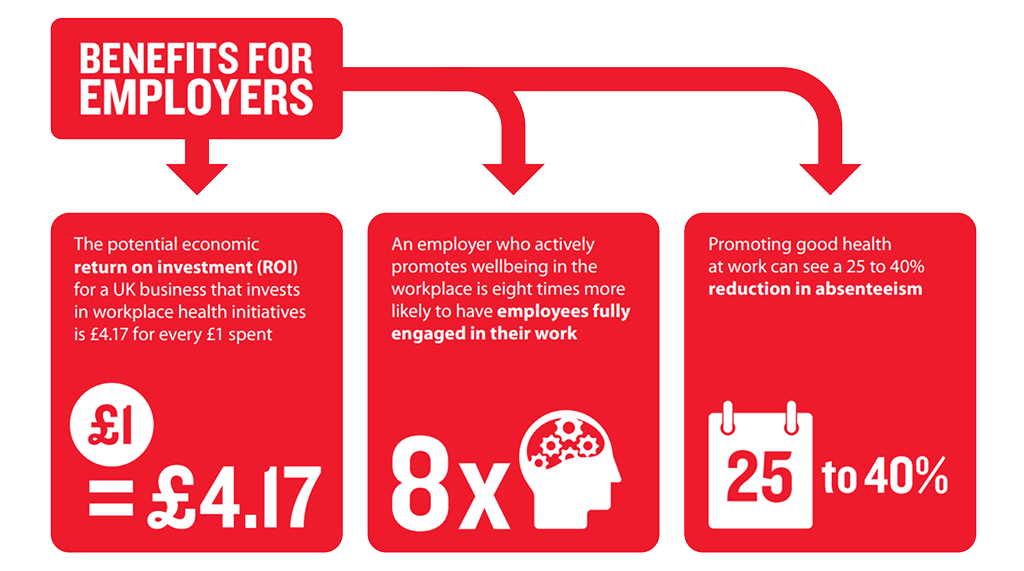
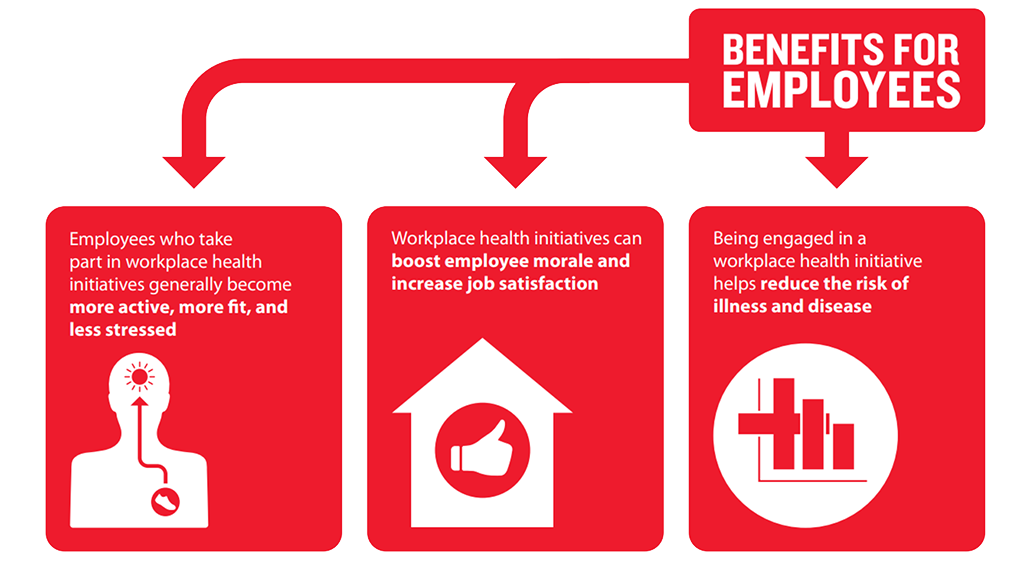
Figure 16 below summarises the benefits for employers and employees of investing in health.
Figure 16: benefits of workplace health initiatives for employers and employees3
Businesses, which are inclusive and invested in health and wellbeing not only benefit their employees. They also help the communities who make up their customer base and use their services. It is not just large employers who can do this. Small employers can also benefit from actions to improve the health and wellbeing of their workforce, even if they do not routinely access the expertise of occupational health services.
Table 5 below gives examples of key benefits for investing in health and wellbeing for business of all sizes. Even the smallest businesses can make a difference.
Table 5: Examples of the benefits and return on investment in health for employers of different sizes.
| Employer Type | Key Benefits of Investment | Evidence of Return on Investment |
|---|---|---|
Large Employers (250+ employees) |
Reduced absenteeism and presenteeism Improved productivity and staff retention Enhanced employer brand and recruitment |
Deloitte found an average £5 return for every £1 invested in mental health support4 Workplace health interventions show positive ROI in 56.5% of cases, especially for absenteeism and psychosocial risks5 |
SMEs (10-249 employees) |
Boost productivity and morale Reduce sickness absence Improve staff retention and engagement |
70% of SMEs offer at least one health initiative, but smaller SMEs provide less support SMEs show strong interest in expanding health support, especially for mental health and musculoskeletal issues Financial incentives and advisory support significantly increase uptake6 |
Micro Businesses (<10 employees) |
Reduced disruption from staff absence Improved morale and productivity Enhanced customer service |
ROI less studied but qualitative benefits include improved morale and retention7 |
 Summary
- Promoting and supporting the health of the workforce makes business sense for employers of all sizes, and will generate savings due to reduced sickness absence, accidents and staff turnover.
- A business which looks after the health and wellbeing of its workforce will also see economic benefits from increased productivity, staff retention, attracting high quality staff and improving the public profile of the business.
- Businesses which look after the health and wellbeing of their workforce will also give knock-on benefits to the health of their communities, through the families of those who work for them.
- For those businesses who are committed to working to improve the health of their workforce, it is important to share the story of how they did this so that others can learn from their experience.
LISTENING TO DERBYSHIRE VOICES
Explore lived experiences from across Derbyshire. Discover how tailored support, persistence, and opportunity change lives.
Footnotes
Society of Occupational Medicine (SOM) (2022), Occupational Health: The Value Proposition↩︎
Society of Occupational Medicine (SOM) (2022), Occupational Health: The Value Proposition↩︎
British Heart Foundation (2015) Health at Work - Business Case Infographics↩︎
Deloitte (2022) Mental health and employers: the case for investment – pandemic and beyond, Deloitte↩︎
Thonon, F, Godon-Rensonnet, AS, Perozziello, A, Garsi, JP, Dab, W, & Emsalem, P (2023). Return on investment of workplace-based prevention interventions: a systematic review. European Journal of Public Health, 33(4), 612-618↩︎
Department for Work and Pensions (2023) Incentivising SME uptake of health and wellbeing support schemes↩︎
Department for Work and Pensions (2023) Incentivising SME uptake of health and wellbeing support schemes↩︎